
Hard water contains elevated levels of naturally occurring minerals, primarily calcium and magnesium. In fact, approximately 85% of homes across Canada and the United States are supplied with hard water to some degree.
While these minerals are not harmful to your health, they can have a significant impact on your home, plumbing system, appliances, and everyday cleaning. Hard water leaves behind scale buildup that can reduce the efficiency and lifespan of water heaters, plumbing fixtures, dishwashers, washing machines, and other water-using appliances. It can also make cleaning more difficult by leaving spots, residue, and soap scum on sinks, showers, dishes, and glass surfaces.
Understanding Water Hardness
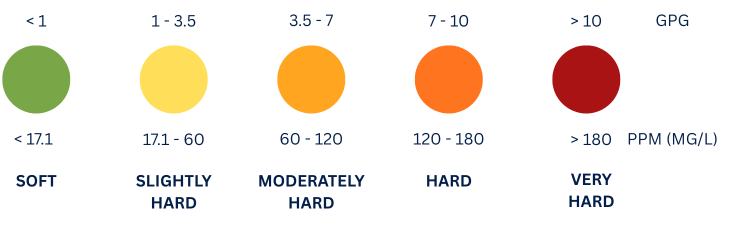
Water hardness is commonly measured in grains per gallon (GPG) or milligrams per litre (mg/L).
Several municipalities across Canada experience hard to extremely hard water conditions.
Examples include:
Toronto water is considered moderately hard at approximately 6–7 GPG
Calgary, Red Deer, and Edmonton average approximately 12–16 GPG
Guelph, Kitchener, and Waterloo often average approximately 34 GPG, which is considered extremely hard
Vancouver water is naturally soft at approximately 0.3 GPG
Most municipalities publish local water hardness information on their websites.
Understanding Water Hardness
The Impact of Hard Water on Your Home
A study conducted by the Battelle Memorial Institute — one of the world’s largest independent research and development organizations — examined the long-term effects of hard water on household appliances and plumbing systems.
The study found that gas storage tank water heaters operating on softened water maintained their original factory efficiency over a 15-year lifespan. In comparison, water heaters operating on hard water lost up to 24% of their efficiency due to scale buildup.
The research also concluded that every 5 grains per gallon of hardness can result in approximately:
A 4% reduction in water heater efficiency
A 4% increase in operating costs
Electric water heaters are affected, by each additional 5 GPG of hardness contributing to scale buildup on heating elements, increasing operating temperatures and potentially shortening equipment life.
Tankless Water Heaters & Hard Water
The study also evaluated tankless water heaters and found a dramatic difference between softened and hard water operation.
Tankless water heaters using softened water maintained their factory-rated efficiency over a 15-year period. However, units operating on 26 GPG hard water experienced severe scale buildup and downstream plumbing blockage, leading to complete operational failure after the equivalent of only 1.6 years of use.
Hard Water & Plumbing Fixtures
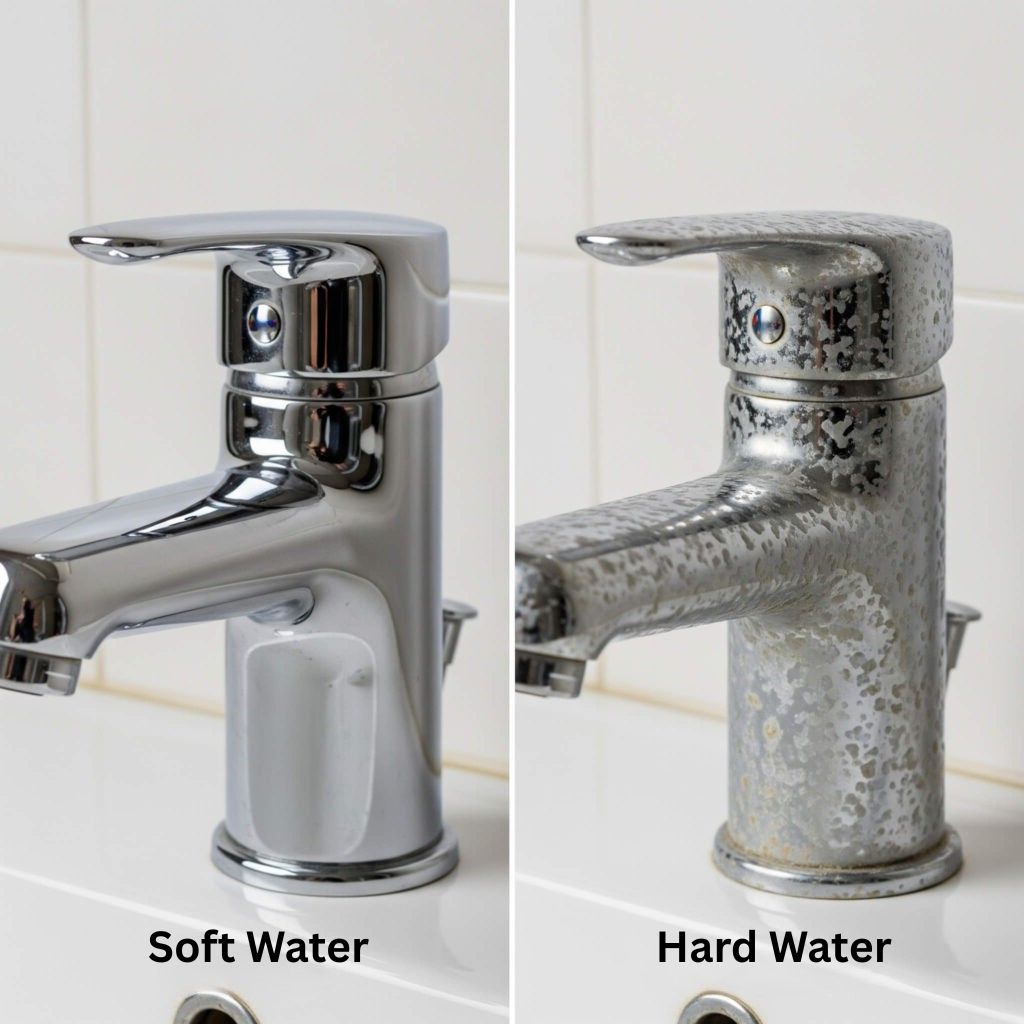
Hard water can also affect everyday fixtures throughout your home. During testing, showerheads exposed to hard water lost up to 75% of their flow rate in less than 18 months due to mineral scale buildup. In contrast, showerheads operating with softened water maintained full flow and a cleaner appearance over time.
By reducing scale buildup and improving efficiency, a quality water softener can help extend the life of appliances, improve cleaning performance, reduce energy costs, and provide cleaner, softer water throughout your home.
Click here to view a summary of the Battelle Study.